
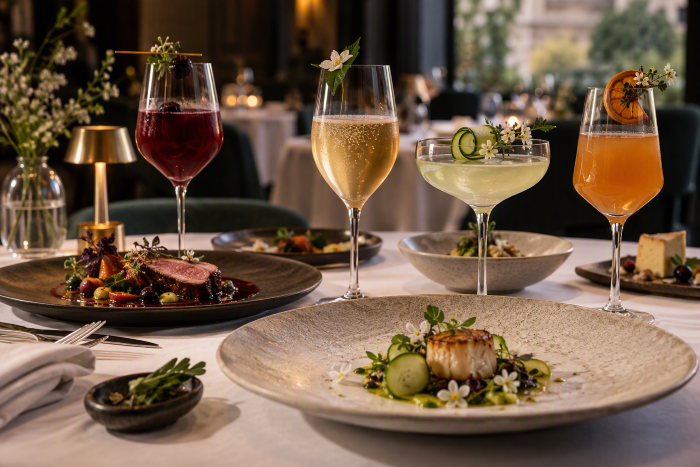
The rise of the non-alcoholic drinks culture in fine dining.
There was a time when opting out of alcohol at a high-end restaurant meant settling for a lukewarm soda, an overly sweet fruit punch, or water with a wedge of lime. For decades, the luxury dining experience was inextricably linked to the wine cellar. A tasting menu seemed incomplete without its alcoholic pairings, and a meal’s prestige was often measured by the bottle on the table.
Today, a quiet revolution is taking place across the UK’s finest dining rooms. The modern diner is increasingly mindful, health-conscious, and discerning, demanding the same nuance, complexity, and pairing precision in non-alcoholic beverages as they expect from a premier vintage. In response, forward-thinking chefs, mixologists, and sommelier teams are redefining what it means to raise a glass. Non-alcoholic dining is no longer an afterthought or a compromise, but an art form in its own right.
Today, the term "mocktail" feels increasingly outdated. What we are witnessing is not the imitation of classic cocktails, but the ground-up creation of sophisticated, non-alcoholic flavour profiles built with true culinary rigour. Restaurants are leveraging advanced techniques like fermentation, cold-brewing, steam distillation, and barrel-aging to craft drinks with genuine body, depth, and astringency.
House-made kombuchas and Jun teas utilise custom tea bases infused with seasonal herbs, pine needles, or local fruits to build natural acidity and effervescence that clean the palate much like a fine sparkling wine. Botanical distillations and hydrosols employ copper stills to extract essential oils from juniper, cardamom, and rare herbs, allowing bar teams to construct complex zero-proof spirits with real bite and longevity on the finish. Meanwhile, single-origin tea and coffee pairings - from rare chilled Oolongs to smoked Lapsang Souchongs - offer tannic structures that seamlessly complement rich meats, game, and aged cheeses.
Perhaps the most significant shift on modern menus is the introduction of dedicated Temperance Pairings alongside traditional wine flights. Rather than serving sweet juices that overpower a dish, sommeliers design non-alcoholic pairings to match the texture, acidity, and aromatic qualities of each course. A roasted duck breast might be accompanied by a tart, spiced dark berry and lacto-fermented plum infusion, while a delicate scallop dish pairs with an aromatic verbena and cold-pressed green apple elixir.
This elevation of zero-proof pairings delivers an inclusive form of hospitality, ensuring that guests who do not consume alcohol - whether for wellness, lifestyle, religion, or personal preference - receive an equally memorable gastronomic journey. Without the dulling effects of alcohol, diners often report a heightened sensitivity to delicate culinary nuances throughout a multi-course menu. Furthermore, when served in fine crystal stemware with meticulous presentation, zero-proof pairings preserve all the luxury and ritual expected of high-end dining.
The rise of non-alcoholic drinks culture is not a passing trend or a seasonal fad, but a fundamental evolution in hospitality. Venues that lead with creativity, seasonality, and respect for their guests' choices are setting new benchmarks for excellence. At Curated Dining, we celebrate the visionary restaurateurs and culinary teams who continuously push the boundaries of modern hospitality, proving that true luxury lies in detail, balance, and thoughtful craft, with or without the proof.